Tuesday, 30 September 2014

Research into Title Sequences

Title Sequences
For our genre of physiological thriller there are many ways you can determine the genre just by the title sequences, this may be due to music, lighting, editing, mise-en-scene etc. however they all show similar conventions which may sometimes include horror and supernatural elements.

Psychological thrillers often incorporate elements of mystery, drama, action, and horror, particularly psychological horror. We thought by researching into influential thrillers and title sequences may determine what we want our film to be like and if we want to subvert or support stereotypes and expected conventions.

Top 15 Psychological Thrillers:
  1. Silence of the Lambs 1991
  2. Rear Window 1954
  3. The Manchurian Candidate 1962
  4. Taxi Driver 1976
  5. Se7en 1995
  6. Memento 2000
  7. The Usual Suspects 1995
  8. Play Misty for Me 1971
  9. Straw Dogs 1971
  10. Les Diaboliques 1955
  11. American Psycho 2000
  12. Cape Fear 1991
  13. The Game 1997
  14. Fatal Attraction 1987
  15. The Talented Mr Ripley 1999
Looking at the most rated psychological thrillers, we then focused on a few to notice the conventions of thrillers and what they contain in the title sequences alone.

Silence of the Lambs


https://www.youtube.com/watch?v=bS-iVlWDq_8

The title sequence to Silence of the Lamb was very simple in the effect that there is just one character on screen while the titles are being shown in the setting of a Forrest. The setting of the title sequence is a typical setting as many films including horrors are set in woods/forests etc. This is due to the thought of being isolated in such a big setting.

Forrest Setting in Silence of the Lambs Title sequence.

Here is a few examples of films that include the Forrest setting similarly to Silence of the Lambs:


When looking into films that are mainly focused in the woodland setting it has seem to be horror films that mainly show this convention. As we are not doing a horror film and wanting to strictly focus on psychological thriller conventions. We decided we didn't want to have the element of a Forrest and wanted a more general setting for example inside a house. However we want the Forrest feature to be apart of our production logo to identify that we feature thriller/horror genres.


When comparing title sequences there is a clear distinction that there isn't many characters introduced as the titles are coming up on screen, however if there are more that one character been introduced then they keep the action to a minimum. Comparing back to Silence of the Lambs there is one of the main characters, Jodie Foster, that is running through the woods and looks like she is taking part in an assault course of some sort. This may be to show adrenaline or strength in the character.


  By researching into the title sequences of some of the top psychological thrillers we know to keep the title sequence pretty basic however include subtle conventions of the genre to keep the audience engaged. We have also noted that there isn't many characters introduced or featured in the titles due to the background of the genre and keeping it simple may add mystery and be really effective on the audience.






Questionnaire Links

Storyline
3 daughters are mourning their mothers death when they read her will and discover that they have a long lost sister and it is their mothers wish for them to find her. Upon finding their lost sister it is revealed she has been sectioned in a mental institute after spending her childhood in adoption. Whilst trying to figure out what happened to their sister they find out something shocking about her.

What genre do you think this film is? e.g. Horror/Thriller/

Do you like the storyline?

Do you think it sounds similar to any other films? If so which films does it sound similar to?

What certificate do you think this film would be?

Would you go and see this film at the cinema?

If you wanted to buy this on DVD how much would you like to pay for it?

Would you make any improvements to this film? 

ONLINE QUESTIONNAIRE: 
Questionnaire Form
Questionnaire Results


VIDEO QUESTIONNAIRE 

Friday, 26 September 2014

Letter from Mother to Daughters

To my dearest daughters, Lily and Elizabeth
I’m sorry it’s come to this time and you’re reading this in such circumstances. I want you two to be happy and I know you’ve both got the will power to do so, you’ve always been best friends as well as sisters and I hope that's how it will always be. I want you to find your older sister, Katherine.  I don’t expect you to understand, just listen to my reasons. You don’t really know of your sister and haven’t met her. The reason for this is she was put for adoption… by me. I couldn’t cope. There was too much pressure and I was young as it was. She won’t know this has happened and I owe it to her to know I’m gone from all of your lives. Please find her, do your best like I know you always do! Thank you.
I’ll love you forever,

Mother x


For the letter we wanted it to be handwritten to make it more personal and add a friendly personality for the mother, we wanted it to look italic to also make it feel as though the women was an educated woman. As this letter is the only remains off the mother we wanted to portray the character to be very friendly and warm which is typical characteristics of a mother figure in the film. As a group we decided that we didn't want to feel any hatred for the mother for adopting her daughter, we wanted to the audience to feel empathy towards the mother character even though she is never actually featured in the film.
 

Thursday, 25 September 2014

Genre Research: History

History of Thrillers
Thriller is a genre of literature, film, and television programming that uses suspense, tension, and excitement as its main elements. Thrillers heavily stimulate the viewer's moods, giving them a high level of anticipation, ultra-heightened expectation, uncertaintysurpriseanxiety and terror. Films of this genre tend to be adrenaline-rushing, gritty, rousing and fast-paced.

The horror and action genres often overlap with the thriller. Thrillers tend to be psychological, threatening, mysterious and at times involve larger-scale villainy such as espionageterrorism and conspiracy.

In terms of narrative expectations, it may be contrasted with mystery or curiosity and surprise. The objective is to deliver a story with sustained tension, surprise, and a constant sense of impending doom. A thriller aims to keep its audience alert. As described by film director Alfred Hitchcock, an audience experiences suspense when they expect something bad to happen and have (or believe they have) a superior perspective on events in the drama's hierarchy of knowledge, yet they are powerless to intervene to prevent it from happening.


Common sub-genres are psychological thrillers, crime thrillerserotic thrillers and mystery thrillers:

Psychological Thriller
Alfred Hitchcock produced many thriller/ suspense films in which included his first thriller (and his third silent film) The Lodger (1926), a suspenseful Jack the Ripper story. 
His next thriller was Blackmail (1929)
plus Murder!Number SeventeenThe Man Who Knew Too Much, and The 39 Steps
From 1935 on, however, most of his output was thrillers.


Other British directors, such as Walter FordeVictor SavilleGeorge A. Cooper, and even the young Michael Powell made more thrillers in the same period; Forde made nine, Vorhaus seven between 1932 and 1935, Cooper six in the same period, and Powell the same. Hitchcock was following a strong British trend in his choice of genre.

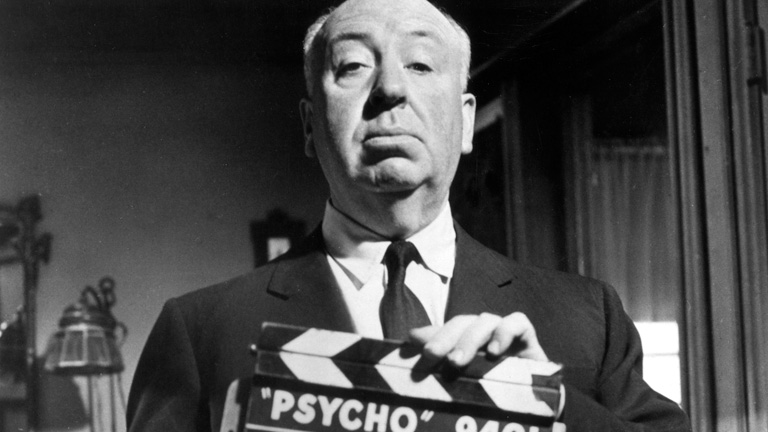
Director Michael Powell's tense Peeping Tom (1960), with Carl Boehm as a psychopathic cameraman – the film was released prior to Hitchcock's Psycho (1960). After Hitchcock's classic films of the 1950s, he produced the shocking and engrossing thriller Psycho (1960) about a loner mother-fixated motel owner and taxidermist.


Shower Scene from Psycho (1960)


Thrillers do borrow themes and elements from those in the past decades. However, to cut the repetitiveness, there are a number of recent thrillers that maintain the aspects of the horror genre; having more gore/sadistic violence, brutality, terror and body counts. 
The recent thrillers which took this approach include Eden Lake (2008), The Last House on the Left (2009), Captivity (2007), Vacancy (2007) and Funny Games (2008). 


Scene from Vacancy (2007)

Other Psychological Thrillers:

  • Se7en (1995)
  • The Machinist (2004)
  • The Silence of the Lambs (1991)
  • Jacob's Ladder (1990)
  • The Shining (1980)
  • The Black Swan (2010)
  • The Ring (2002)
  • Saw (2004)
  • Paranormal Activity (2007)
  • Memento (2000)


Genre Research: Storyline & Themes

Storyline
  • The fast pace and action of thrillers means the structure of the story is often different than other genres. e.g. the romance genre utilises the alternating scene & sequel format – there is a scene of action or conflict, then a sequel where the heroine goes away to think over the events, and plan their next action. In a thriller this would slow down the pace if there were thinking sequels like this; instead the decision making and plans are made quickly and on-the-fly in the middle of the action.
  • Tense and constant conflict scenes – conflict through every scene, whether in dialogue, action, events… the conflict moves the action forward. The conflict must escalate – or undergo change throughout the story. Layer conflict on top of each other, complicate it with twists and turns 
The primary elements of the thriller genre:
  • The protagonist(s) faces death, either his and/or her or somebody else's.
  • The force(s) of the antagonist's must initially be cleverer and/or stronger than the protagonist's.
  • The main storyline for the protagonist is either a quest or a character that cannot be put down.
  • The main plotline focuses on a mystery that must be solved.
  • The film's narrative construction is dominated by the protagonist's point of view.
  • All action and characters must be credibly realistic or natural in their representation on screen.
  • The two major themes that underpin the thriller genre are the desire for justice and the morality of individuals.
  • One small, but significant, aspect of a thriller is the presence of innocence in what is seen as an essentially corrupt world.
  • The protagonist(s) and antagonist(s) may battle, themselves and each other, not just on a physical level, but on a mental one as well.
  • Either by accident or their own curiousness, each character is dragged into a dangerous conflict or situation that they are not prepared to resolve.

Themes
Guilt and obsession are two themes that often occur in recent psychological thrillers. Sometimes, each of these themes can generally stand alone as the core of a film, but often times, they are combined with a context of ambiguity regarding what is real and what is imagined.
Psychological thrillers also often deal with common themes such as death, reality, perception, identity, existence or purpose, and one or two of these themes should be wound through the novel.

Reality: This theme is often challenge by the antagonist during the film, causing confusion to the protagonist. This allows the antagonist to play with the protagonist psychologically.

Perception: The ability to see, hear or be aware of something through mundane senses. The storyline would bend these senses with other themes such as reality, this frequently blinds the main character, in thinking what is there and confusing their state of mind.

Guilt: This theme usually haunts the main character, building up a traumatising past that might have been forgotten, so therefore haunting them about it makes it difficult to forget. This can be shown through flashback, hallucinations, illness' etc.

Obsession: This is a constant and repetitive thought or idea that occupies a person's mind in a continuous or non-stop way. Obsession is what commonly destroys a human mind and fixates on one thing only.

Shutter Island is an example of a film that combines the theme of guilt with ambiguity regarding reality, creating a mind-bending experience that even has horror-like elements. The story is so meticulously constructed that a second viewing is, in many ways, more rewarding than the first one.


Film Certificate Research

Our film will contain some horrific images and may contain blood in some scenes and possible strong violence. One of the characters in the film is a woman locked in a mental institute, therefore some younger audiences may not understand this film and could be scared by the mental character in our film. BBFC says that in 12A films horror and psychological threats may be featured as long as they
are not frequent or disturbing.


Some scenes in our film may have a psychological threat and may be disturbing to a younger audience, therefore I think that our film would be better suited to our audience if it had a 15 certificate.


THE DEVIL INSIDE is a supernatural horror film in which a young woman investigates the claim that her mother murdered three people while being exorcised. The film was classified '15' for strong supernatural horror, bloody images and very strong language

This is similar to our film as it features supernatural horror, some disturbing images and a psychological threat.

Tuesday, 23 September 2014

Research into Similar Films for Individual Storylines

First Storyline: 
American Horror Story: Murder House is a similar storyline due to the woman in my story being stuck in the house being tortured and in the murder house, the people stuck in the house are unable to leave as they are ghosts. However it is similar to paranormal activity as the ghosts in the house are torturing the current owners of the house.


Second Storyline:
Se7en is the similar story to mine. As it involves two police officers looking for someone who's doing the deadly sins. However my ending is difficult because the police officer is involved in the crime rather than trying to find out who is causing it all.

Sunday, 21 September 2014

Genre Research: Characters

In the sub genre of psychological thrillers tend to have typical characters that are expected to be featured. Psychology involved the mental and internal process of the body and mind, in psychological thrillers the characters reflect this:

Typical characters featured in psychological films:

  • Convicts
  • Criminals
  • Stalkers
  • Innocent victims
  • Prison inmates
  • Menaced women
  • Characters with dark pasts
  • Terrorists
  • Police
  • Psychotic individuals
Innocent Victims
Innocent characters are usually used in the thriller genre to create suspense as the audience feel like they are in danger. The stereotypical innocent victim tends to be a women as they have connotations of vulnerability. In most horror films it is based around a victim who is being chased, similarly in thrillers, as it adds fear and tension to the audience if there is a good person who could be in danger. An example of an innocent victim could be Tina from "Nightmare on Elm Street".


Police
Police are often used in thrillers to set the scene and give the feeling of protection and authority. Police often appear when they capture the convict or rescue the victim, in both these situation they make the audience feel a sense of relief and safety for the character. The police force are essential in some thrillers due to having a divide between good and evil, however in some films the police may also end up being in danger which adds more tension for the audience.


Genre Research: Iconography

Iconography: 
The visual images and symbols used in a work of art or the study or interpretation of these. Using iconography in films makes the plot more interesting by adding layers and making the audience feel a certain way subconsciously.

Typical iconography associated with thrillers:

Knifes
Knifes are typically associated with horror/thrillers as they have connotations of death and brutality. By using a simple prop like a knife it sets the genre straight away as it only tends to appear in films that is wanting to make the audience feel fear. 


Shadowing/Silhouette 
Shadows and silhouettes are a common piece of iconography featured in thrillers as it induces fear for the audience as it instigates mystery and enigma. By using shadowing it gives a dark atmosphere to a film as the character in the film usually don't realise the shadowing until they are in danger.


Bars on windows and fences
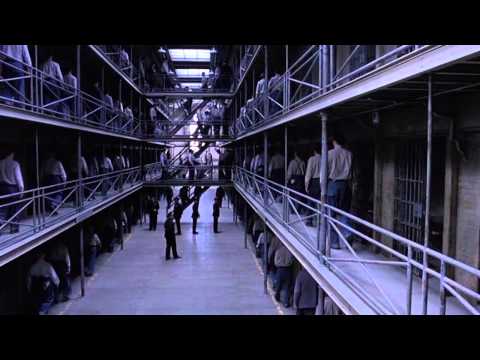
Bars on windows are used to show imprisonment and isolation, which links to the conventional thriller.  Fences consisting of razor barbed wire also suggest that the characters are imprisoned and have no way of getting out which shows how they are detached from the outside world and therefore conforms to the convention of isolation in thrillers.


Wednesday, 17 September 2014

Genre Research: Title Sequence and Music

Title Sequence
Usually the title sequence is the first thing your audience sees on-screen that introduces them to the story, which means that is has to capture its tone and prepare your viewers for what is about to unfold. It also introduces the cast and crew, who produced it etc. It is the film equivalent of a book cover. Usually using an undertone of sinister music. Well known for the low bass notes and high vocal notes so the two contrast.

Se7en -

  • The title sequence uses music that gives an eerie feeling that someone is being watched/followed
  • There are amplified screams throughout the title sequence which imply danger and insecurity, generating the idea of helplessness, giving it a thrilling feeling
  • Close up shots of items are used which indicate parts of the films and whether they will be relevant
  • It speeds up to build tension and the rising action of the film
  • Its sepia which gives a dirty/gritty impression causing the audience to feel uneasy


Music
At the beginning, gentle music is usually used after the title sequence to give a normal feeling to the film as most psychological thrillers start of with a normal character with an everyday life. Throughout the film sinister music is used, such as high tension or eerie music. Or silence is used so the audience becomes tense

Tuesday, 16 September 2014

Genre Research: Similar Films

Psychological Thriller
Psychological thriller is a fictional thriller story which emphasises the psychology of its characters and their unstable emotional statesPsychological thrillers often incorporate elements of mysterydramaaction, and horror, particularly psychological horror

Girl, Interrupted

Our film is similar to the film "Girl, Interrupted" due to the setting of a mental institution and the same idea of mental health within women. We have only female characters in our film in which we have one girl who isn't mentally stable, however we don't want to make it too similar to the film in which we have based it to be more physiological and have a different plot.


"In 1967, 19-year-old Susanna (Winona Ryder) feels that "reality is becoming too dense" and is diagnosed with Borderline Personality Disorder. The doctor suggests to her parents that she be committed to the Claymore Hospital, and she spends the next 18 months struggling with her troubled psyche and the bizarre world of the institution. Girl, Interrupted was based on the autobiography of Susanna Kaysen, who really did spend a year-and-a-half in the McLean Psychiatric Hospital in Belmont, Massachusetts"

The Silence of the Lambs

Our film has elements that are similar to The silence of the lambs as it is in the same genre of Psychological thriller. The element of murder is similar to our storyline as we have a mental sister that ends up killing her own mother. I feel this film is influential to our film as it helps us with typical elements which may be featured in this kind of genre. Such as characters, iconography and themes.

"Clarice Starling, a young intelligent FBI trainee, has been sent to the Baltimore state hospital for the criminally insane to interview an inmate Dr. Hannibal-the cannibal- Lecter. A brilliant renowned psychiatrist turned infamous psychopathic serial killer. She must match wits with Lecter -who has the darkest of all minds- and trust him to give her clues in the search for "Buffalo Bill". A nick name for a loose, unknown, unstoppable psychopathic serial killer..."


Genre Research: Settings, Storylines and Themes

Typical Settings:
  • Urban City to create the idea that the town is normal and nothing unusual happens and you wouldn't expect it. It usually links to a normal family or person living there when things start going wrong. Such as the film, House at the End of the Street. A family move to a small town and things start getting complicated when she befriends someone
  • Rural City such as the countryside/desert. This insinuates that the family/person lives out of the way and gives a creepy vibe to the story. E.g The shining is set in a isolated hotel away from everything
Typical Storylines:
  • There has to be suspension, tension and pace throughout the film. The protagonist must be proactive rather than reactive, he makes things happen rather than waiting for them
  • The main character must have grown and changed his views and opinions by the end of the film. Usually helping them get through the hard part of the story
  • A turning point that makes the main character go from their everyday lives to a journey where their solving an issue or finding out whats happening to them
  • Ending must resolve all loose ends but a satisfactory twist by the end
For example, The Shining
A man and his family go away to an isolated hotel. On the way his son sees visions of the hotels past using his telepathic gift knows as 'the shining.' The man is underway a writing project and as a result of cabin fever he goes insane slowly. After a ghost convinced him, he goes completely insane and only the son can save them with 'the shining.'


Themes:
  • Obsession - This emotion is driven by fear and has the potential to become extremely intense. Many times, this emotion is hidden to others, and the character dealing with the emotion feels as if no one else could understand their obsession. This obsession tends to lead to the ultimate downfall of the fall character
  • Identity - It is one's sense of themselves. in many psychological thrillers, characters are either confused about their identity completely. This causes them to do whatever they can in order to regain their sense of identity
  • Reality - A sense of what is real. Characters usually don't have an accurate sense of reality or have a hard time distinguishing between what is real and what is not
  • Death - Throughout there will be a few deaths done in different ways. Usually this freaks the protagonist out and causes them to go insane
For example, 
Black Swan
The main character (Natalie Portman) is obsessed with perfection. She is a ballet dancer and has a lot of pressure to maintain her look and figure. She confuses reality with fascination

Psycho 
A theme that runs through Psycho is confused identity. The themes were revealed through motifs such as: birds, eyes, hands and mirrors.